Over-the-counter hearing
Hear more, show less. The smallest hearing aid gives up the feature built for restaurants.
MDHearing publishes its whole spec sheet. One row on it decides whether the smallest model suits your week.
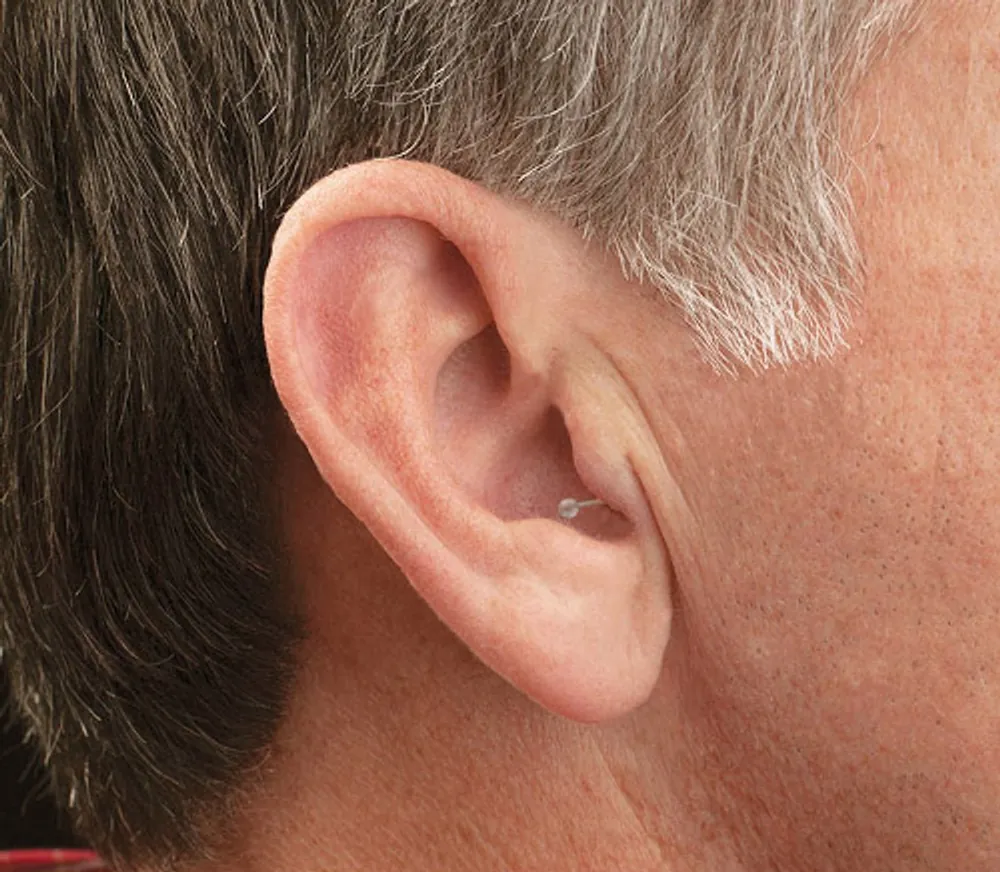
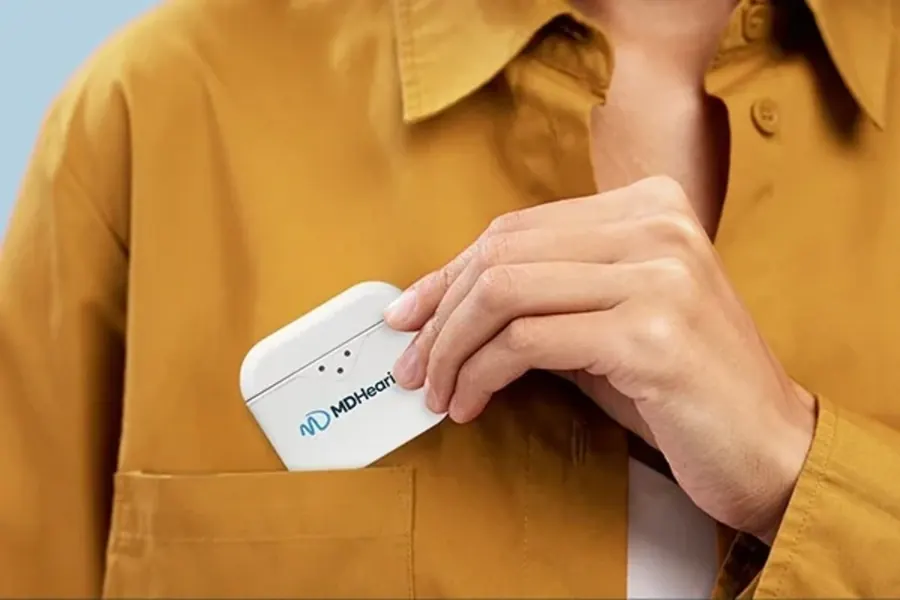
MDHearing has been running an ad this month with four words on it: Hear More. Show Less. It is a good line, because it names the two things people actually weigh, and it does not pretend they are the same thing. What the ad does not have room to say is that the company has already published, in a table on its own website, the point where those two things start pulling against each other.
There is one row in that table worth reading before anything else. It is not battery life and it is not price. It is a row called Dual Directional Microphones, and it has check marks in two columns out of six.
This article walks the table. Everything in it comes from what MDHearing publishes about its own products, and from reviews its own customers have left on its site. Nothing here is medical advice, nothing here is a diagnosis, and no page on the internet can tell you what your ears are doing. What it can do is stop you buying the wrong shape.
Part oneNobody leaves a conversation all at once
Read enough of MDHearing's review page and a pattern shows up before the products do. People do not describe a moment. They describe a habit they picked up without deciding to.
The volt has proved to be the answer to having to ask “what” so many times or just nodding in agreement to conversations I can't quite hear. Jeff L., 5 stars, March 16 2025, published on mdhearingaid.com
Nodding in agreement to conversations you can't quite hear. That is the whole thing in nine words, and it is a customer's phrasing, not a marketing department's. It is also why the delay is so long: nodding works. It gets you through the dinner. It costs nothing on the night, and it is only expensive across years.
The second pattern is more specific, and it matters for what follows.
★★★★★
“when she or anyone spoke I missed the beginning of what they were saying. I could hear it, but not understand it.”
John K., May 5 2025
★★★★★
“For years, my wife complained that I couldn't hear her. [...] I don't say WHAT and she doesn't yell”
Joe A., July 2 2025
I could hear it, but not understand it. Volume and clarity are not the same complaint, and MDHearing knows it: one of its running ads opens on the line Turning things up isn't always the answer. Hold on to that, because it is exactly what the microphone row is about.
The box that sits in a drawer
The gap between deciding and doing has its own review on their site, and it is the most honest thing on the page:
I bought a pair of these two years ago and put the box in a drawer. When my hearing deteriorated (I'm 80) I opened the box, read a little of the instructions, and turned on the charger. I was able to figure it all out in about an hour, and they charged right up. Chip e., 4 stars, May 15 2026, on the NEO XS, published on mdhearingaid.com
Two years in a drawer, then an hour to set up. He is not unusual, he is just unusually specific about it. And note what he says next in the same review: “They are invisible.” That is the part he bought, and it is the part the rest of this article is about.
What “show less” is measured in
Discretion is usually sold with adjectives. MDHearing sells it with numbers, which is rarer and much easier to check. Here is their published size table, drawn to scale.
Actual size, to scale, from MDHearing's published dimensions
Drawn at 190 pixels to the inch from the Dimensions row of mdhearingaid.com/hearing-aid-comparisons, read August 14, 2026. The NEO XS PRO shares the NEO XS body at 0.43 by 0.6 inches. The VOLT MAX 2 measures 1 by 0.3 by 0.5 inches and the AIR 3 measures 1.125 by 0.25 by 0.5 inches, both behind the ear.
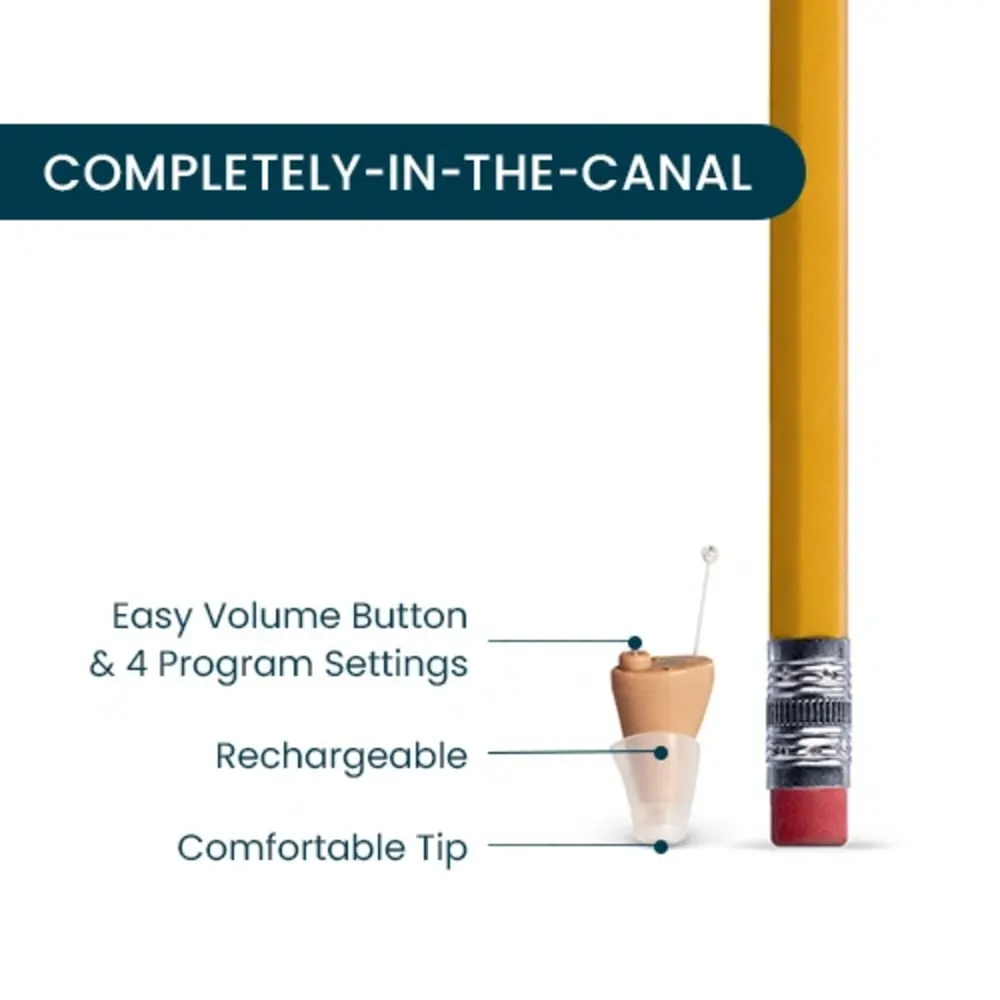
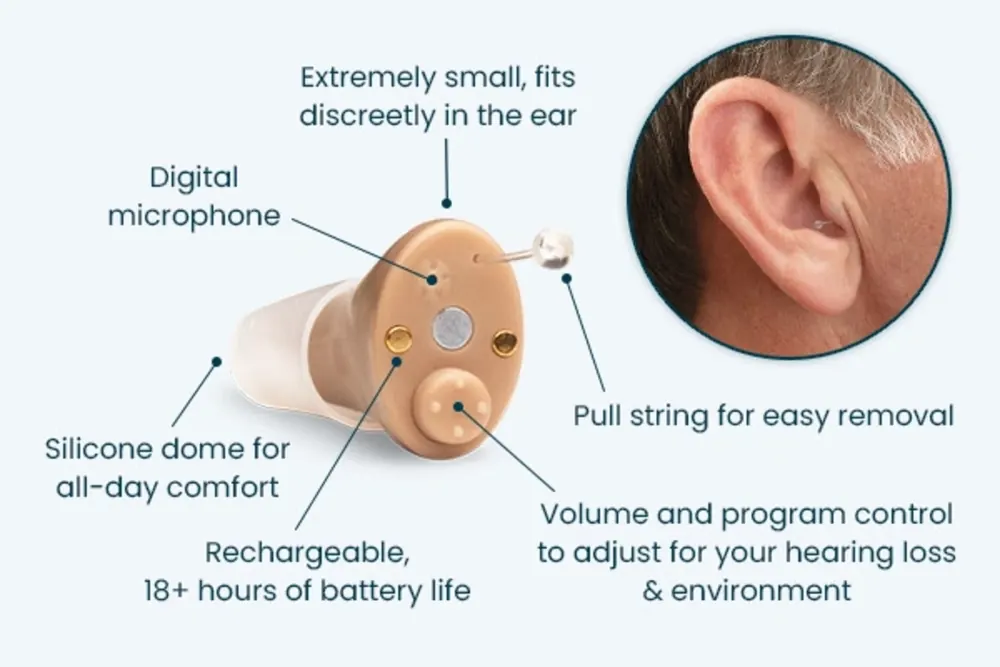
The NEO XS is the smallest thing MDHearing makes, and the company is precise about where it goes: it is a completely-in-the-canal device, half the size of the NEO, sitting inside the canal rather than at its opening. The NEO, by comparison, is described as in-the-canal. One word of difference, and about a third of the length.
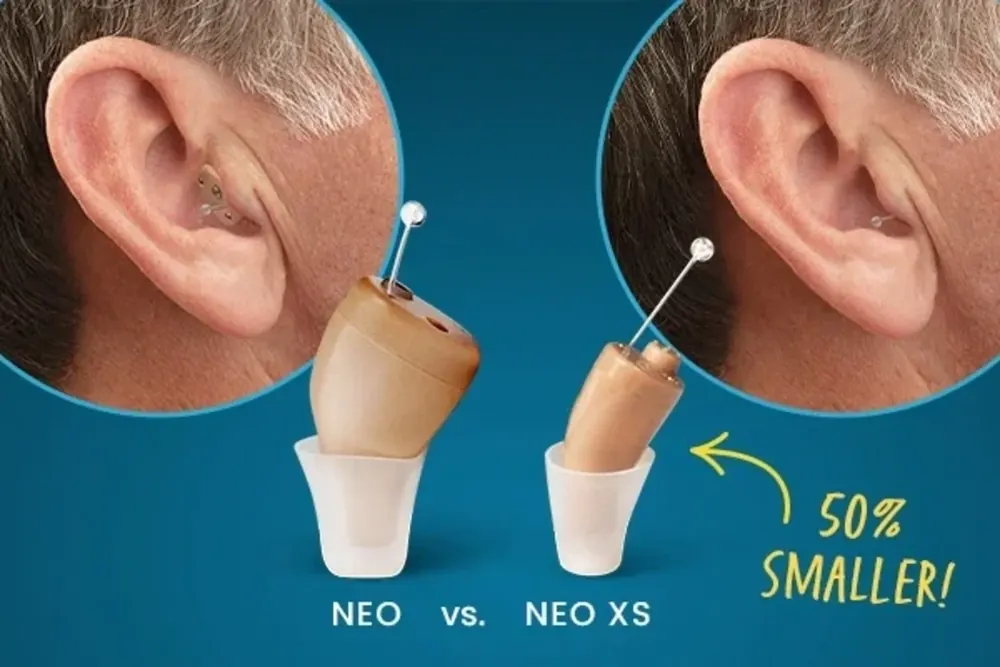
There is a review on the NEO XS page that proves the point better than any photograph, because the customer was trying to do something else entirely:
i can't seem to be able to take a picture of them in my ears. Douglas R., 5 stars, verified buyer, July 20 2025, published on mdhearingaid.com
The row most people skip
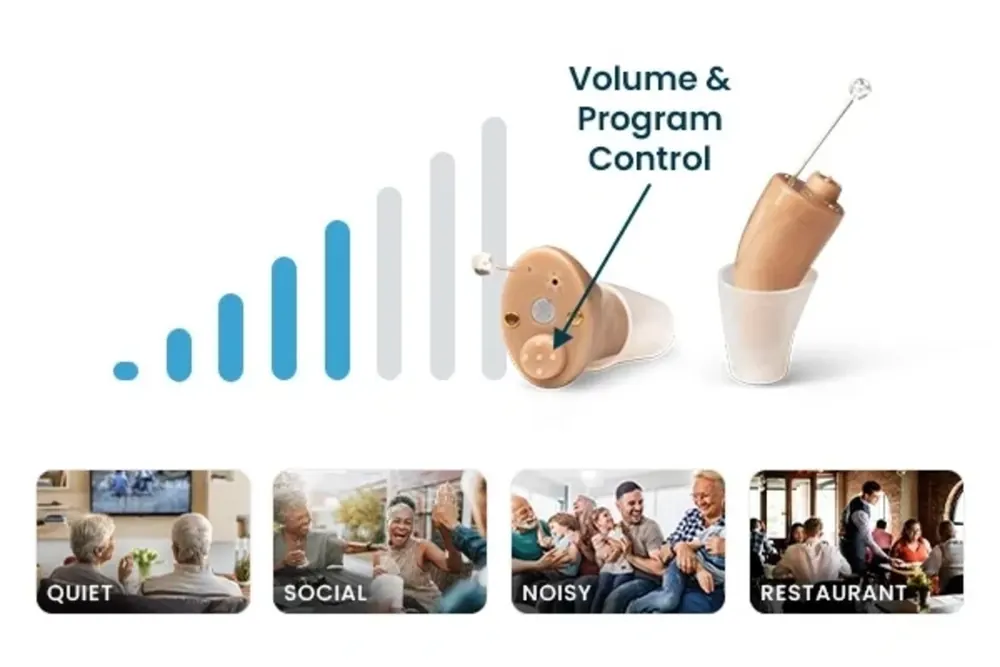
Now the table. MDHearing lists nine features across six models, and most rows are ticked all the way along: every model is FDA registered, every model is rechargeable, every model is user adjustable, all but one carry four sound environment settings.
Three rows are not ticked all the way along. Two of them travel together, smartphone control and personalized sound profiles, because they belong to the same two app models, and both are a matter of taste. The third is this one, and it is not a matter of taste:
MDHearing's own description of the feature
“Two directional microphones work together to distinguish the sounds you want to hear from the ones you don't, so conversations are clearer even in the noisiest environments like restaurants and social gatherings.”
Dual Directional Microphones, tooltip on mdhearingaid.com/hearing-aid-comparisons, read August 14, 2026. The feature appears on the VOLT 4 and the VOLT MAX 2. It does not appear on the NEO, the NEO XS, the NEO XS PRO or the AIR 3.
So the sentence in the ad is literally true, and it has a literal cost. The models that vanish into the canal are the models that do not carry the microphone pair built for noise. Not because anyone cut a corner: the pair appears only on the two that sit outside the ear, where there is room to hold two microphones apart.
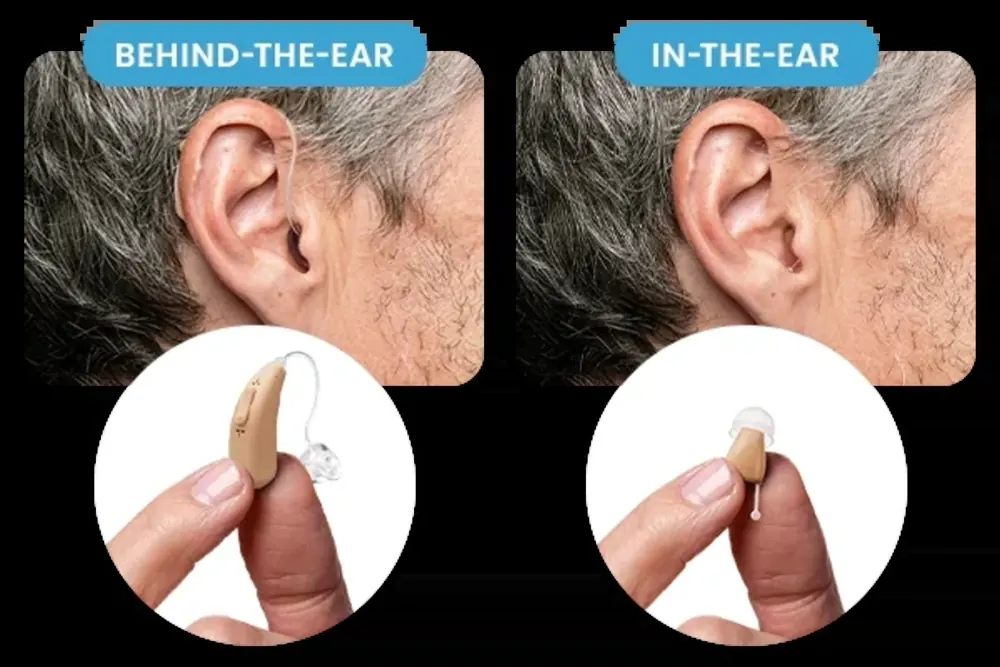
Which is why the honest version of the question is not which is the best one. It is where do you spend your difficult hours.
The two ends of the range, side by side
| From MDHearing's table | NEO XS | VOLT 4 |
|---|---|---|
| Where it sits | Completely in the canal | Behind the ear |
| Size | 0.43 by 0.6 in | 1.17 by 0.25 by 0.32 in |
| Dual directional microphones | No | Yes |
| Noise reduction | Improved | Advanced |
| Feedback cancellation | Improved | Advanced |
| Sound environment settings | 4 | 4 |
| Battery on a charge | 18 hours | 20 hours |
| From the charging case | 100+ hours | 80+ hours |
| Smartphone control | No | No |
| Price per pair | $244 | $326 |
Every value in this table is copied from the comparison table published at mdhearingaid.com/hearing-aid-comparisons on August 14, 2026, including the two prices, which are the anniversary sale prices shown that day. If smartphone control matters to you, the NEO XS PRO and the VOLT MAX 2 are the two models that have it.
What that looks like when it goes wrong
MDHearing leaves its three and four star reviews up, which is worth something. Here is one from a customer who bought a model and found the room it could not do:
My wife tells me she is glad I got them, because we can have conversations in a moving car now. [...] I cannot understand the sermons at church, I take them out multiple times to punch the button, hold it for 3 seconds, etc. Gary C., 4 stars, verified buyer, August 3 2025, published on mdhearingaid.com
A car is a small sealed box with one talker. A church is a large reverberant room with one distant talker and a hundred small noises. Those are not the same task, and no single setting solves both. That review is not a complaint about the company, it is a description of physics, and it is exactly the case the directional pair is built for.
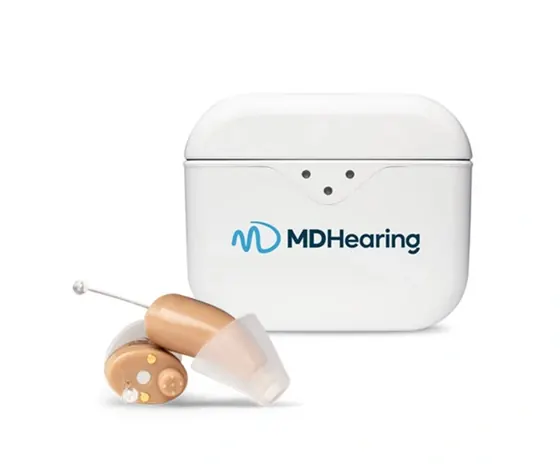
If your hard hours are quiet ones
One on one, the television, the kitchen table, the telephone. Choose the thing nobody can see. NEO XS, in the canal, $244 a pair on the day this was written.
See the NEO XS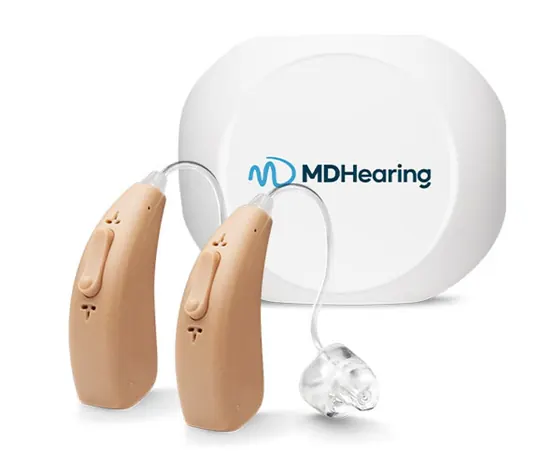
If your hard hours are loud ones
Restaurants, church, a bar, grandchildren in one room. Take the two microphones. VOLT 4, behind the ear, $326 a pair on the day this was written.
See the VOLT 4Both are wrong for somebody. Buying the invisible one for a life spent in restaurants is the expensive mistake, and it is expensive in a way that does not show up on the receipt: the aid ends up back in the drawer, and the drawer is where the years go.
Part fourWhere the price actually comes from
MDHearing is unusually blunt about its own pricing, and the explanation is structural rather than technological. In their words, on their FAQ:
There's a markup from the manufacturers to the clinics, and then another markup from the hearing clinic to the customer. Buying hearing aids this way also requires multiple visits just to get the devices in hand, and additional appointments for fittings and maintenance. MDHearing, How are MDHearing's prices so low?, product page FAQ, read August 14 2026
The company was founded in 2008 by a board-certified Chicago ear, nose and throat doctor, and its stated reason for existing is that his patients were going without. Whatever you make of the origin story, the pricing table underneath it is checkable, and it is published in full. Their own estimate of what a comparable pair costs in a clinic sits in the same table as what they charge.
Comparable clinic price per pair, against MDHearing's price per pair
Both columns are MDHearing's own published figures, from the Pricing rows of mdhearingaid.com/hearing-aid-comparisons, read August 14, 2026. The clinic column is their estimate of a comparable pair, not a survey, and their prices that day were anniversary sale prices. Bars are drawn to a common scale.
Customers arrive at the same arithmetic from the other direction, in their own numbers:
★★★★★
“I only paid $297 for the pair. My original hearing aids (Siemen) cost me $2700! What a bargain the VOLT 4 is at only one-ninth the price, and they work better.”
Howard R., March 9 2026
★★★★★
“I have been wearing the Neo XS Pro since they were introduced. [...] For several years I bought hearing aids that cost nearly $3,000, but they were never as good as the Neo XS Pro.”
Anne M., March 8 2026
Lillian W., a verified buyer, put the whole American version of this story into one review in February 2026, in capitals, which is how she wrote it: she went for a hearing test, was quoted five thousand dollars, found her insurance would cover fifteen hundred of it, asked friends and relatives, and bought over the counter instead. Her set came in well under a thousand for the pair.
Part fiveWhat over the counter does not cover
This is the part most pages leave out, so here it is with the qualifiers intact, all of them MDHearing's own.
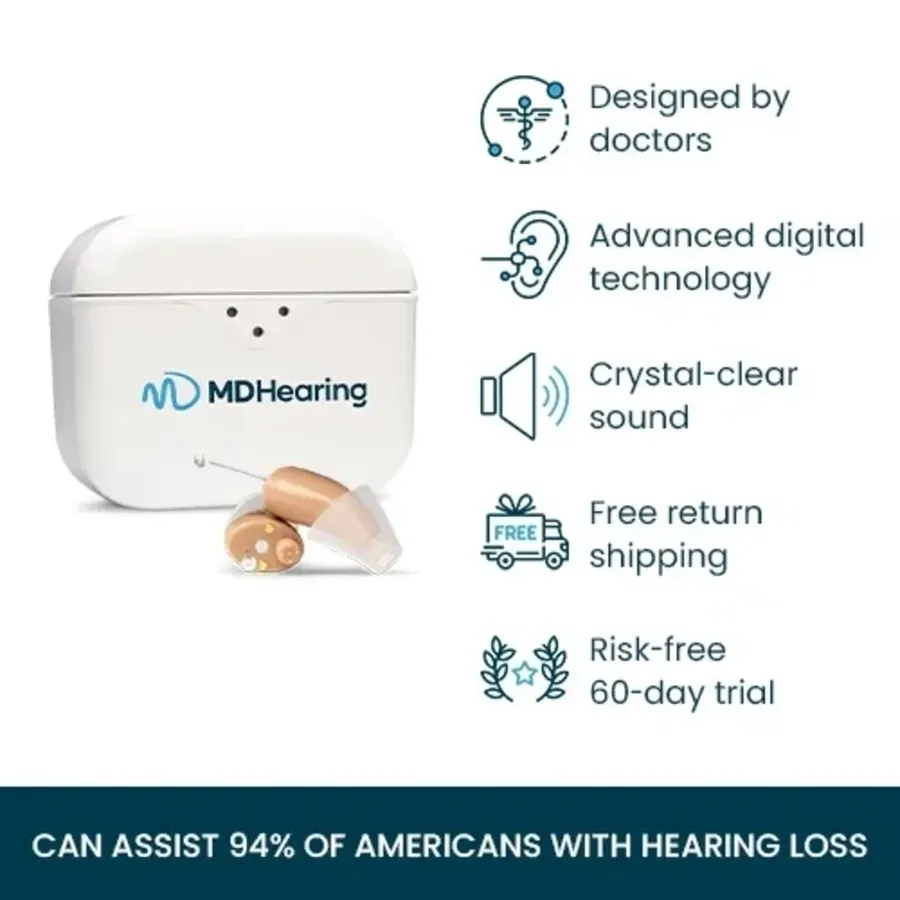
Their devices are registered with the FDA as class I medical devices in the over-the-counter category, and MDHearing states that they are designed for adults 18 and older with mild to moderate hearing loss, which the company describes as over 94 percent of Americans with hearing loss. No prescription is required and no clinic visit is required. That is the whole permission, and it is a real one, but it is bounded.
Their own advice, printed on their product pages, is worth repeating: you do not need a hearing test to buy, but they recommend taking one if you suspect a problem, because it tells you whether an over-the-counter device is the right category at all. Theirs is free, runs online in under eight minutes, and needs nothing but headphones and a quiet room.
Take MDHearing's free online hearing test
And there are people it does not work for. Their review page says so, in reviews they have chosen not to take down:
★★★★
“I can hear the things I couldn't without it, birds, keys etc. But conversation hasn't impyoved.”
Allen C., verified buyer, January 10 2025
★★★★★
“They were more than helpful, just didn't work for my husband”
Peggy H., verified buyer, March 14 2025
Both of those customers still had 60 days to send the devices back, which is the mechanism that makes the whole category workable. If sound comes through but speech still does not, that is the signal to talk to a licensed professional rather than to buy a second device.
Part sixThe part that is not in the box
The one thing a clinic gives you that a cardboard box cannot is a person who watches you put the thing in your ear for the first time. MDHearing's answer is a free telehealth appointment with a licensed hearing specialist, which is unusual in this category and is the single most useful thing on their offer sheet.
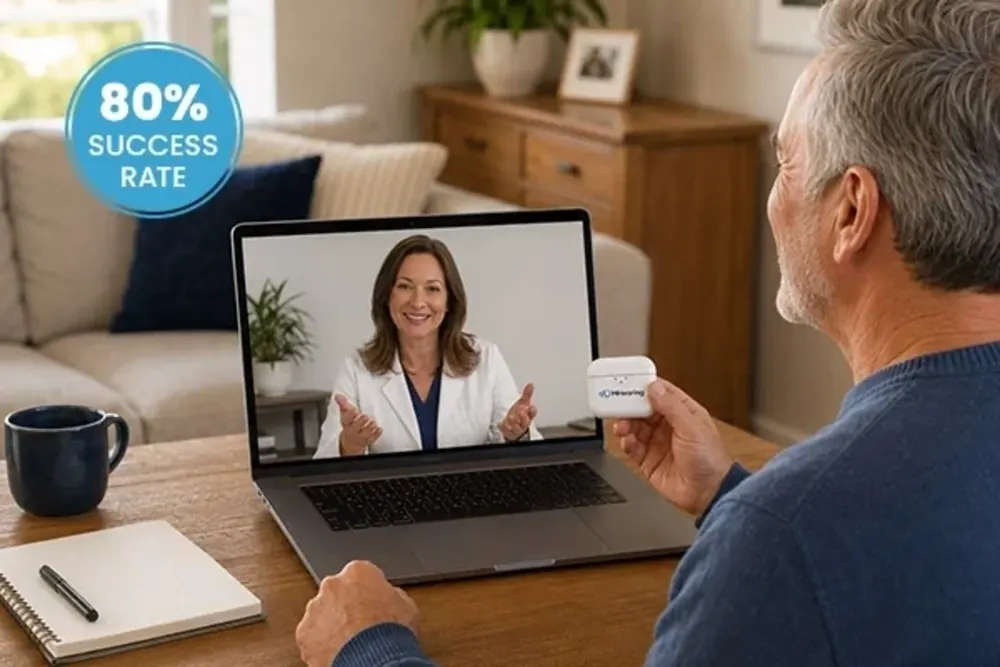
What happens on it is mundane and that is the point: finding a dome size that seals so the aid does not whistle, setting the four sound environments, and answering the questions people are too embarrassed to ask a stranger in a shop. Their pages note you can bring a family member onto the call.

Sandra Porps, AuD, Head of Audiology at MDHearingLicensed audiologist in Illinois, and licensed audiologist and hearing aid dealer in Michigan. Certified by the American Speech-Language-Hearing Association, doctorate from Central Michigan University, published on subjects from basic audiology to cochlear implant outcomes. Biography published on mdhearingaid.com/about-us.
She is not the only one. MDHearing lists eighteen named, licensed hearing professionals on its About page, with the year each was licensed, several of them going back to the early 2000s and to careers in private clinics before this. For a company that sells by post, publishing that list is the load-bearing decision.
What six thousand people said afterwards
MDHearing publishes its review distribution rather than only its average, which lets you see the shape rather than the headline.
All site reviews, mdhearingaid.com, read August 14 2026
4.57 out of 5
across 6,059 published reviews
Counts and average from the review widget published on mdhearingaid.com, read August 14, 2026. Bars are drawn relative to the five star count. Roughly one review in eleven is three stars or below, and those reviews are still on the site.


Joe Namath, Pro Football Hall of Fame quarterback“I was wearing expensive hearing aids for years until a good friend of mine told me about MDHearing. I've never had a better pair of hearing aids. I wear them all the time, and no one can even see them.” Published on mdhearingaid.com.
Note which half of the promise he ends on. Not the sound. The fact that nobody can see them. Two other customers put the same thing in plainer language:
They are not embarrassing to wear and allowed me to be part of the conversation again. Joseph, 5 stars, March 30 2025, on the VOLT, published on mdhearingaid.com
I recommend MDHearing aids for seniors wanting to get back in the conversation. Larry J., 5 stars, verified buyer, May 24 2025, published on mdhearingaid.com

The prices, last, on purpose
Anyone who has been quoted for hearing aids in a clinic knows why the number goes at the end. Here is the whole range as MDHearing published it on the day this was written, during their eighteenth anniversary sale.
Per pair, mdhearingaid.com, August 14 2026
| Model | Style | Pair |
|---|---|---|
| NEO | In the canal | $197 |
| NEO XS | Completely in the canal | $244 from $297 |
| AIR 3 | Behind the ear | $297 |
| VOLT 4 | Behind the ear | $326 from $397 |
| NEO XS PRO | Completely in the canal, app | $490 from $597 |
| VOLT MAX 2 | Behind the ear, app | $490 from $597 |
Sale prices published during MDHearing's eighteenth anniversary sale and read on August 14, 2026. They may have changed since. Single ear pricing is listed separately on each product page, and MDHearing offers Affirm financing, quoting $26.81 a month over twelve months at 15 percent APR on a $297 purchase as its published example.
Every one of them ships with the same four things: a 60 day risk free trial, free return shipping, a one year warranty on materials and workmanship, and free lifetime support from their licensed team. The trial is the only number that really matters at the point of decision, because it is the one that makes being wrong survivable.
If your difficult hours are quiet ones, take the invisible one. If they are loud ones, take the two microphones and let people see a small beige curve behind your ear, which they will stop noticing in a week. What is not worth doing is a third year of nodding.